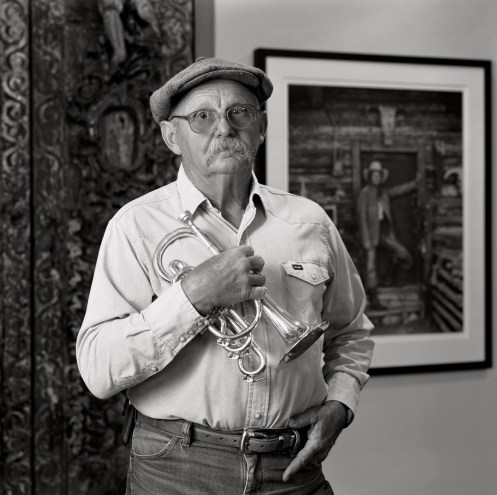
My friend, photographer and Guggenheim Fellow Jay Dusard with his favorite instrument. Jay was an iconic Arizona portraitist and documentary photographer. He photographed the North American cowboy and cowgirl’s of the western United States. From Northern Mexico to Montana he made portraits that will stand the test of time way beyond his years. When I made this portrait in 2006 I asked him what is closest to your heart beyond photography. He said, it was music and his Cornet. I asked him to stand for the portrait embracing his Cornet. Behind Jay is one of his iconic portrait of Julie Hagen, Wagstaff Land & Cattle Company, Wyoming 1981. Jay passed away Sept. 20, 2025. He was 88 years old. RIP Jay Dusard!
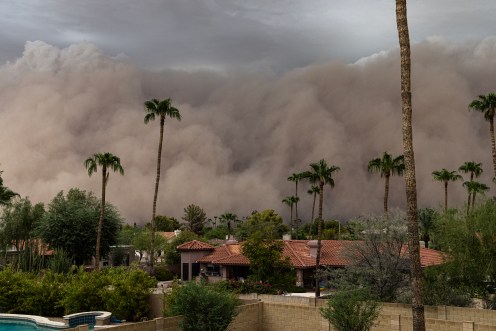
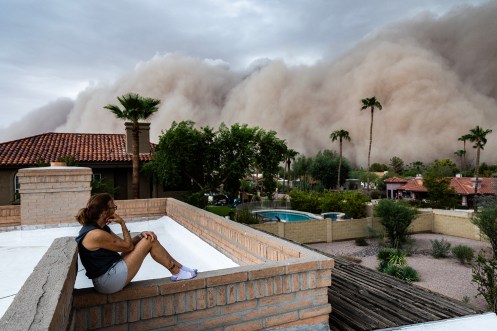
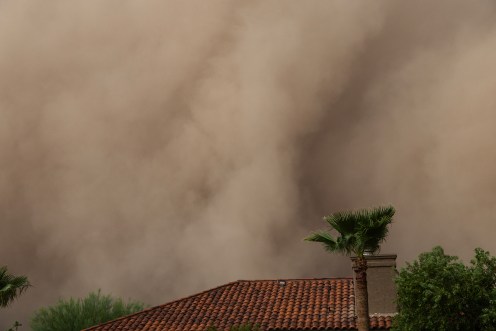
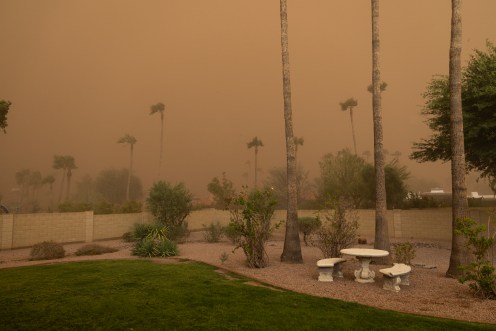
Maybe you saw this on the news of a recent weather event in Phoenix, Arizona August 25, 2025. The Valley experienced a huge Monsoon dust storm (Haboob). It was the largest Haboob since July 05, 2011.
I was driving home from Costco when I looked to the south and saw dark ominous clouds which appeared to go all the way the ground. From experience, I knew this looked like a giant dust storm coming our way. I got home in about 10 minutes. Our last giant dust storm I put my camera on a tripod and videoed the storm coming in. It was very dramatic where daylight turns to night in minutes. I put that video on Youtube. You can see it here if you want to https://www.youtube.com/@barmst Look for Phoenix Dust Storm July 5, 2011.
When I got home I saw the storm approaching so I ran to the side of the house and grabbed a ladder to get on the roof. We have a flat roof so I wasn’t hanging on for dear life. I wanted to do it differently this time so I shot still images. This was a huge storm 4 thousand feet high and 40 miles wide. With my cell phone I called my wife who was inside the house and said get up here this is and epic storm.
What you are seeing in this series is the storm approaching our home. When the storm hit us we got off the roof in a hurry. The wind was guesting 60 to 70 miles per hour. Additionally we don’t want to breathe the dirt. In Arizona the dirt can carry a fungus that can get into your lungs and infect you with an illness called Valley Fever. Valley Fever can get pretty bad and is very hard to diagnose and treat. It is a lung infection that can least a year to be cured.
This is a glimpse of what an Arizona Haboob looks like.


Back when I first decided to quite my day job as a wholesale wine sales rep 1980 to 85. I was obsessed to fallow my dream of becoming a professional photographer. Frustrated with how hard it was I decided to do a portrait of myself to illustrate how I felt. I used a 4X5 camera with Polaroid type 55 film. My friend Dave Nations (RIP) tripped the shutter. It was a collaboration of sorts where he asked me to exaggerate my movements. It worked out and this was the result. The photo was made south of Phoenix, Arizona on the Gila Indian Reservation. Thinking back I’m glad we didn’t get caught trespassing by tribal police. So here I am portfolio in one hand, day-at-a-glance appointment book in the other marching along ready to start my new career but not knowing where to go. The photo was taken in 1985. I was photographing as much as I could trying to get better and gain some experience while trying to get freelance work. It was a slow process but I believed if you want something bad enough it will happen if you work hard and stick with it. In the beginning it was a fake it till you make it. Practice makes better. It would be three more years before I got a full-time job at the Scottsdale Progress Newspaper. Three more years I went onto the Pulitzer Prize winning newspaper Mesa Tribune for a total of 20 years as a photojournalist. Laid off January 1, 2009 I then transitioned to 11 more years as a freelance commercial photographer. In the beginning we had very little money making many sacrifices for my quest to be a photographer but in the end I was so fortunate to find a job that was made for me.

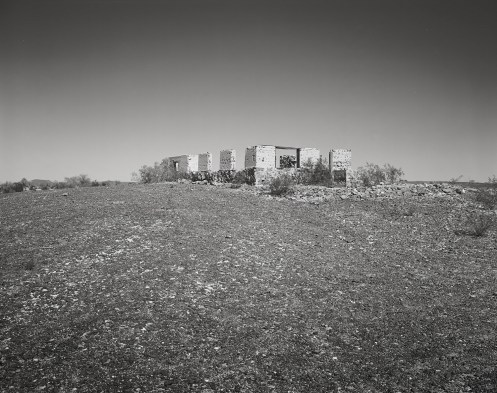
This photograph was made a few years ago using an Arca-Swiss 8×10 large format analog camera. I initially created traditional contact prints in the darkroom. To a photographer, it reflects exquisite craftsmanship and tonal richness. But to non-photographers, the subtlety can sometimes be lost.
To better communicate the image’s impact to a broader audience, I scanned the original negative and produced a 28×22-inch pigment print, matted with a 5-inch border and framed to 40 inches wide by 35 inches tall. The result allows viewers to fully experience the ultra-high resolution and immersive detail that large format photography offers.
This image has been shown in several exhibitions and received outstanding feedback—including from Dr. Becky Senf, Chief Curator at the Center for Creative Photography. I’ve photographed this location in the Sonoran Desert many times—with and without clouds, using various cameras including digital—but this first image remains the strongest.
Sadly, the location has since changed dramatically. What was once a hauntingly quiet desert scene is now a fenced yard filled with heavy construction equipment. Like many of my photographs, the subject no longer exists as it once did. These fleeting, altered landscapes are part of an ongoing series I call Transformations—a meditation on impermanence, time, and the evolving relationship between humanity and the desert.
I hope you enjoy this apocalyptic glimpse into the ever-changing Sonoran Desert. Feel free to leave a comment or a like.

I got up before sunrise so I could be at this location for the morning light. As I was setting up my camera, I could see a vehicle zig zagging way off in the distant desert. There were no roads so I was wondering what’s up with this. This area is at least 40 miles from any towns but very close to Interstate 8. I thought, I would be completely alone when I finally could see it was a Jeep getting closer and closer to me. Instinctively, I’m getting mentally prepared for an encounter of some kind. So just when the light was prime this old prospector type guy pulls up in an old Willies Jeep with a rifle mounted across the folded down windshield. He asked, what are you doing out here? I said, I’m taking pictures what are you doing out here? He said, he was scouting for the upcoming deer hunting season. He was a story teller and informed me that the area was a military training ground during the World War II and the ruin I was photographing was an old ranch house. I was impressed with his historical knowledge and his endless stories but he made me miss sunrise. I finally had to stop him and said, I need to take a picture hold on. The photo wasn’t impressive at all but the encounter was like wow you never know what kind of encounter you’re going to run into and it seems you’re never alone. In retrospect, what disappoints me most is I should have asked him if I could take his picture. But no, I was hyper
fixated on the building. A missed opportunity for sure.
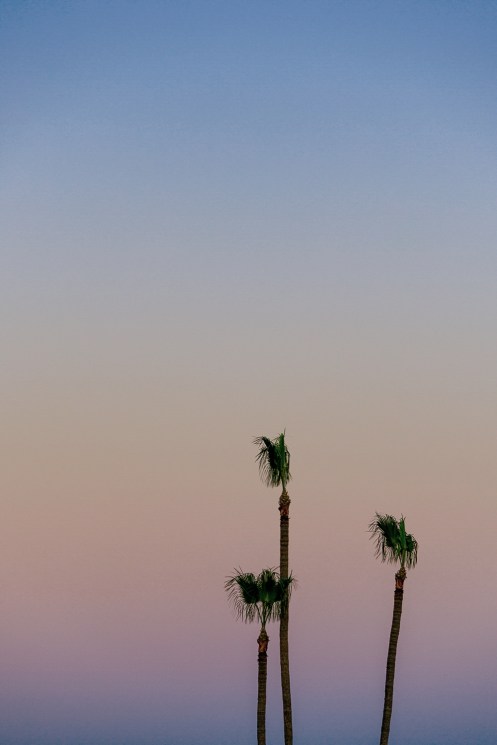
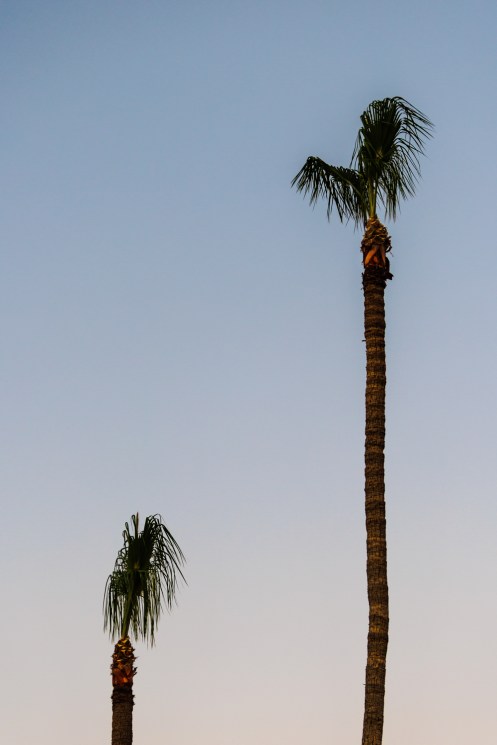
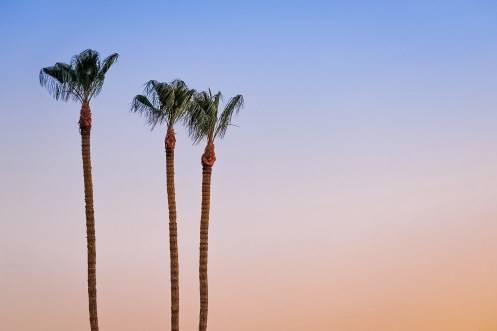
The homeowners in the neighborhood have recently had their Palm tree’s thinned out. I was in the backyard when the sun was setting and the distant Palm tree’s looked surreal against the gradient color of the setting sun. These are a few frames I took while the sun was setting. Living in Arizona there is one thing that is a fact. These tree’s are everywhere and provide know shade against the blazing sun.
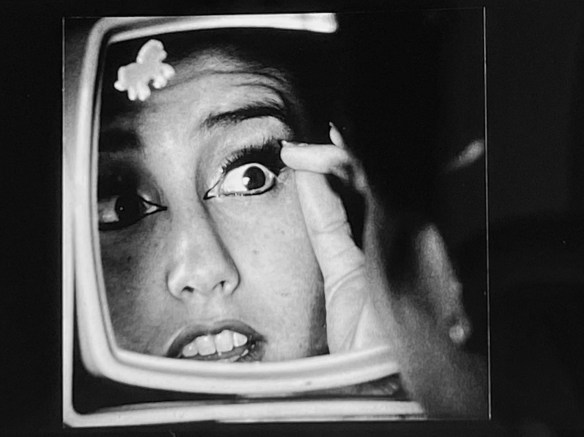
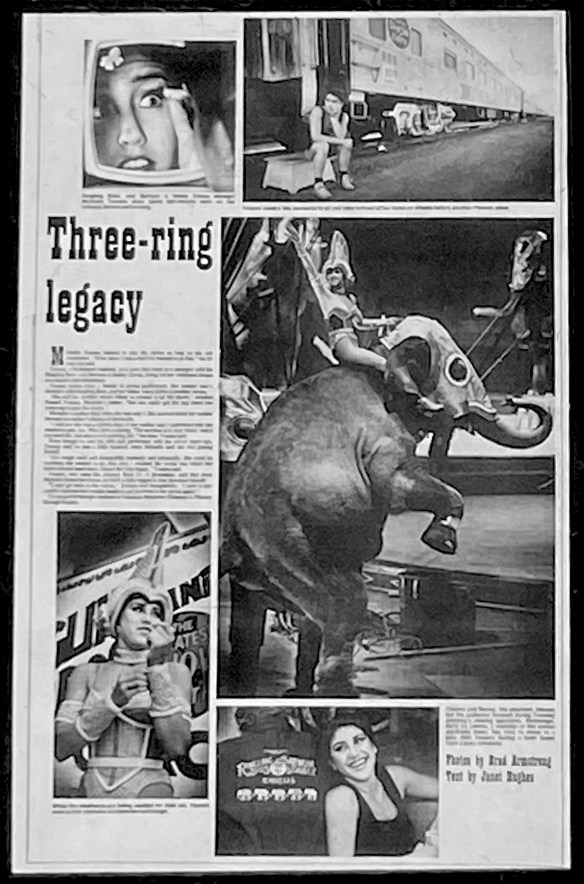
This was one of the first photo pages I created after being hired into the world of newspaper photojournalism. It was published in the Scottsdale Progress newspaper on July 5, 1990. I took all the photographs, and the accompanying text was written by Janet Hughes.
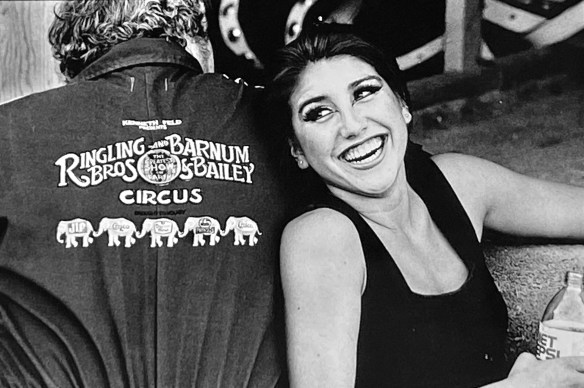
I was assigned to photograph the Ringling Bros. and Barnum & Bailey Circus in downtown Phoenix. In journalism, you’re required to get names, and when I found out the showgirl riding the elephant was Michelle Youens, 19, of Scottsdale, Arizona, I instantly thought, there’s a story here.
She told me she had always wanted to join the circus. Her mother—who passed away when Michelle was just three—had also been a circus showgirl. As Michelle grew up, her father, Russel, who had worked as a clown in the circus, would tell her stories and show her pictures of her mother performing. Inspired by those memories, Michelle decided to follow in her mother’s footsteps and join the circus herself.
These photographs were taken over the course of two weeks, during which I visited the circus daily to capture the essence of her life.


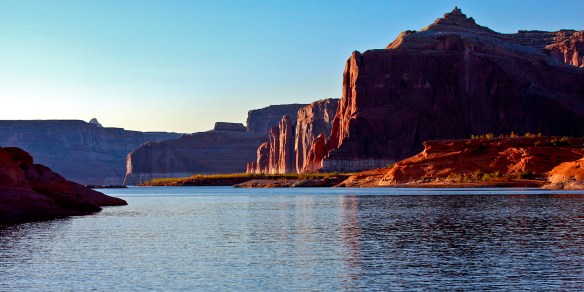
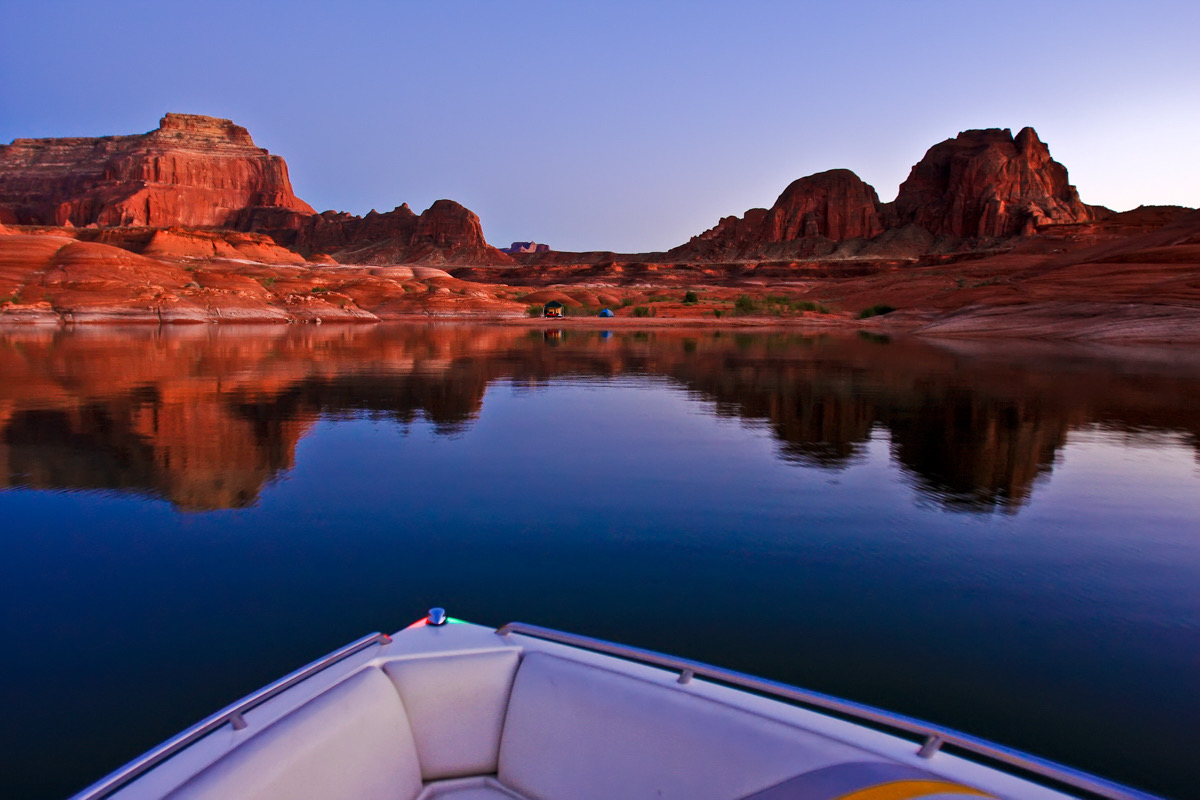
Sunset on Lake Powell. A few years back my wife and I went 40 miles up stream (Colorado River) and camped for three days. During sunset the red sandstone turns to a rich saturated red. The visual sensory excitement just overwhelms as the cliffs turn an Iron oxide deep red. It is absolutely overwhelming and beautiful. In these photographs we were heading back to our camp. I took two cameras a Canon 40D and a Hasselblad film camera on the trip. The bow of the boat photo was taken with the digital 40D.


 Bradford Armstrong